


ME and MY PHOTOGRAPHY
I am based in Lafayette, Louisiana, but I am available to travel to make tintypes, ambrotypes and glass negatives for albumen and salt prints.
I am now retired after working 17 years for the LSU AgCenter as a writer and photographer. Before that, I worked 26 years as a newspaper reporter in Alexandria, Shreveport and Lafayette.
I began making tintypes in 2007, using the same chemicals and methods of 19th century photographers.
Although I have worked mostly civil war reenactments, I will photograph any event with wet-plate photography - music festival, parties, boudoir - and I'm up for a challenge.
I will also conduct demonstrations of the process for schools, libraries and other similar institutions. If you'd like to contact me about arranging a session, go to my contacts page.
TINTYPE PHOTOGRAPHIC EMPORIUM
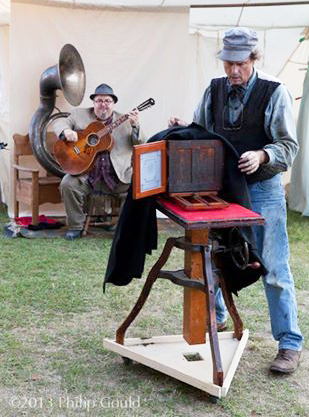
Making a tintype of musician Mark Rubin at the 2013 Blackpot Festival. (Photo by Philip Gould)
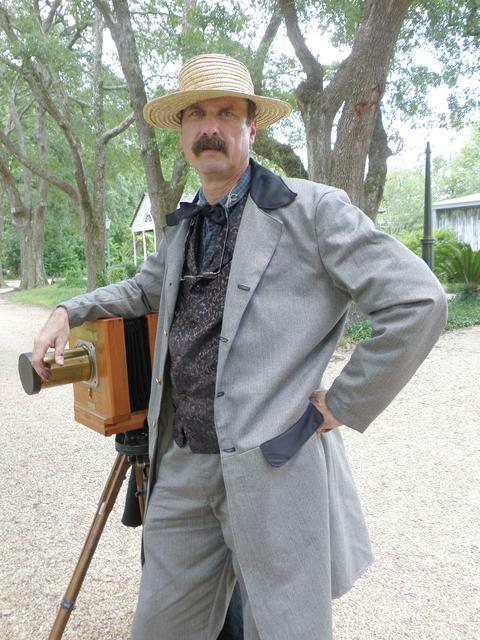
At the LSU Rural Life Museum where I have demonstrated the wet-plate process. I'm wearing a new coat that has since become stained from silver nitrate. My camera here was made by master craftsman Ty Guillory. The lens is a Dallmeyer 3B.
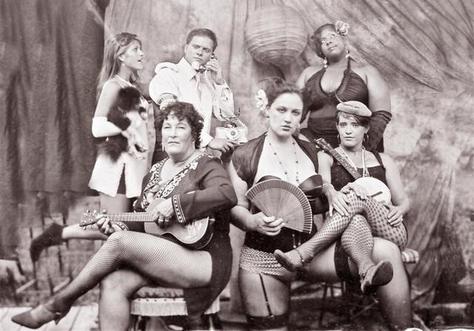
Cast photo for a musical, "The Marionettes." 2009
